German Soft Pretzels (Classic Bavarian Style)

This post may contain affiliate links. Please read our disclosure policy.
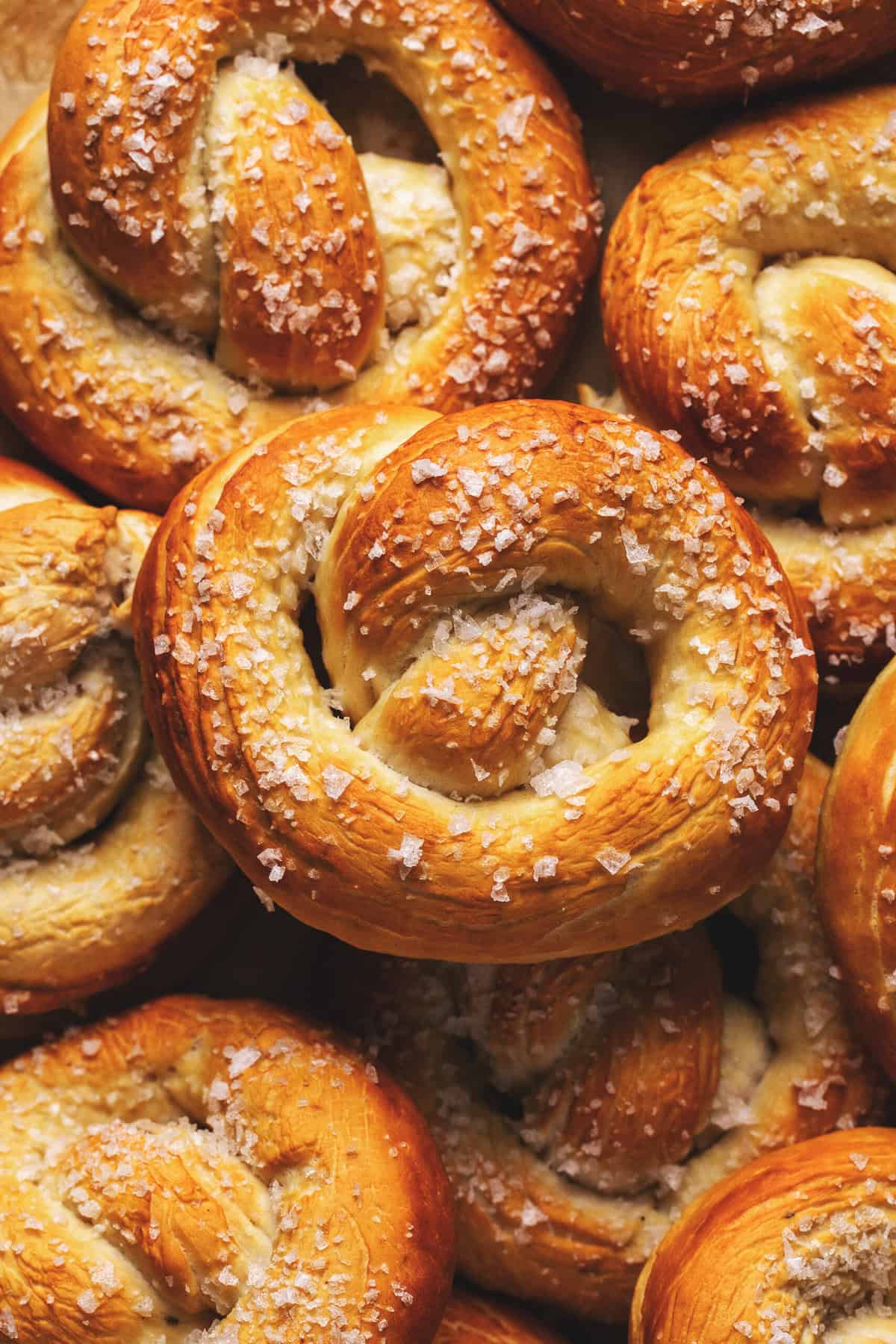
Soft, chewy, and perfectly golden, these homemade German soft pretzels have a classic bakery-style bite with a crisp exterior and fluffy center—easy to make and impossible to resist!
For more fresh-baked goodness, try my recipes for Easy Foccicia, Olive Garden Breadsticks, and Garlic Parmesan Knots.
Why This Recipe Works
These German soft pretzels are soft and chewy on the inside, golden and slightly crisp on the outside, and just like the classic Bavarian pretzels you’d find at Oktoberfest. Made with a traditional baking soda bath and simple pantry ingredients, this homemade soft pretzel recipe is easier than you think — and absolutely worth it! Here’s why I love it so much:
So tasty — I do not know one single person who doesn’t love a German soft dough pretzel. So soft and warm and doughy — it’s truly bread in its most perfect form. I’ve had to taste-test many versions of this recipe to get the most perfect one for you and this one — this German pretzel recipe is SO GOOD you’ll want to make a batch daily.
Stand mixer — No kneading by hand here. Let the stand mixer with a dough hook do all the mixing and kneading for you.
Baking soda bath — When making a bavarian pretzel recipe, it’s imperative that you first “cook” them in boiling water with baking soda to give them that dark chewy crust. This is key to making traditional German pretzels and can’t be skipped!
Great for a crowd — I’ve been known to double this recipe a time or two to feed a crowd. This easy soft pretzel recipe is a perfect treat for tailgating, the Super Bowl, sleepovers, dinner parties — you name it.
Ingredients

Bread Flour — I use bread flour rather than all purpose because it has more gluten in it which means the pretzel will be softer and chewier and less “doughy.” However, you can use all-purpose as well if that’s what you have.
Brown Sugar — Just a touch of brown sugar gives these easy soft pretzels a hint of sweetness.
Salt — Two kinds of salt are used in this recipe — a fine salt in the dough and a coarser/flakier salt on the top before baking.
Instant Yeast — Instant yeast helps the dough rise more quickly.
Unsalted Butter — I almost always bake with unsalted butter because most recipes call for the addition of salt. But you can use salted butter if that’s what you have.
Boiling Water and Baking Soda — You must first boil the shaped pretzels in a baking soda/water bath to help the top turn brown and firm in the oven.
How to Make German Soft Pretzels
The instructions for this easy soft pretzel recipe may look long, but it goes pretty fast and it’s SOOOOO worth it!
- First, use a fork to combine the bread flour, salt, brown sugar, yeast, and water into a shaggy dough in the bowl of your stand mixer.
- Add the dough hook to the mixer and set it on “low.” Gradually add the butter a bit at a time until it’s all incorporated into the dough, scraping as you go.
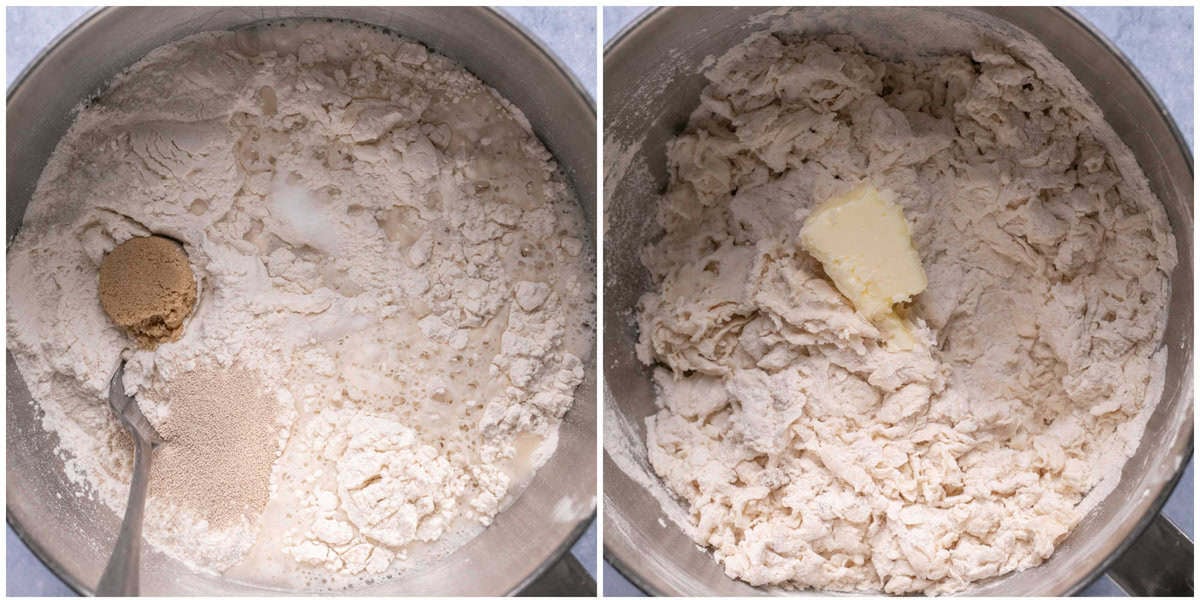
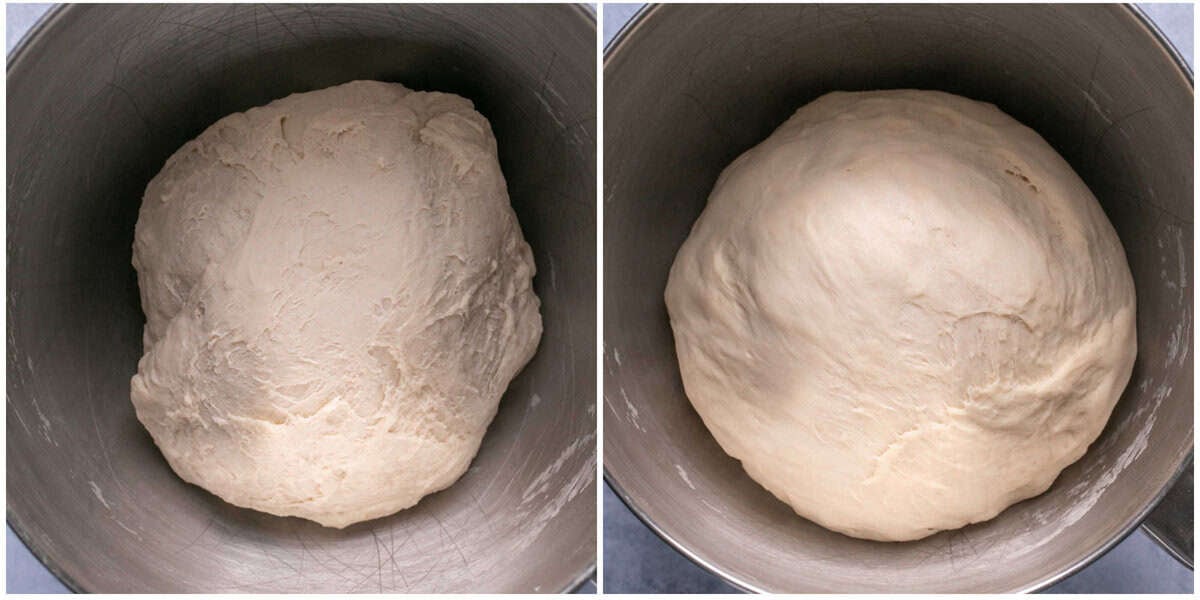
- Turn the mixer to “high” and let the dough knead for 5 minutes. Cover, and let it rest for 30 minutes in the mixing bowl.
- With wet hands, lift the dough from the side of the bowl and fold it in on itself. Turn the bowl a bit and repeat this step until the dough is a smooth, tight ball. Cover the dough and let it rest another 30 minutes.
- Now turn the dough onto a clean surface, dividing into 10 equal pieces. Should you encounter any sticking, use a bit of oil (not flour) to help the dough release.
- Roll each piece into a long, roughly 20” log, with slightly tapered ends.
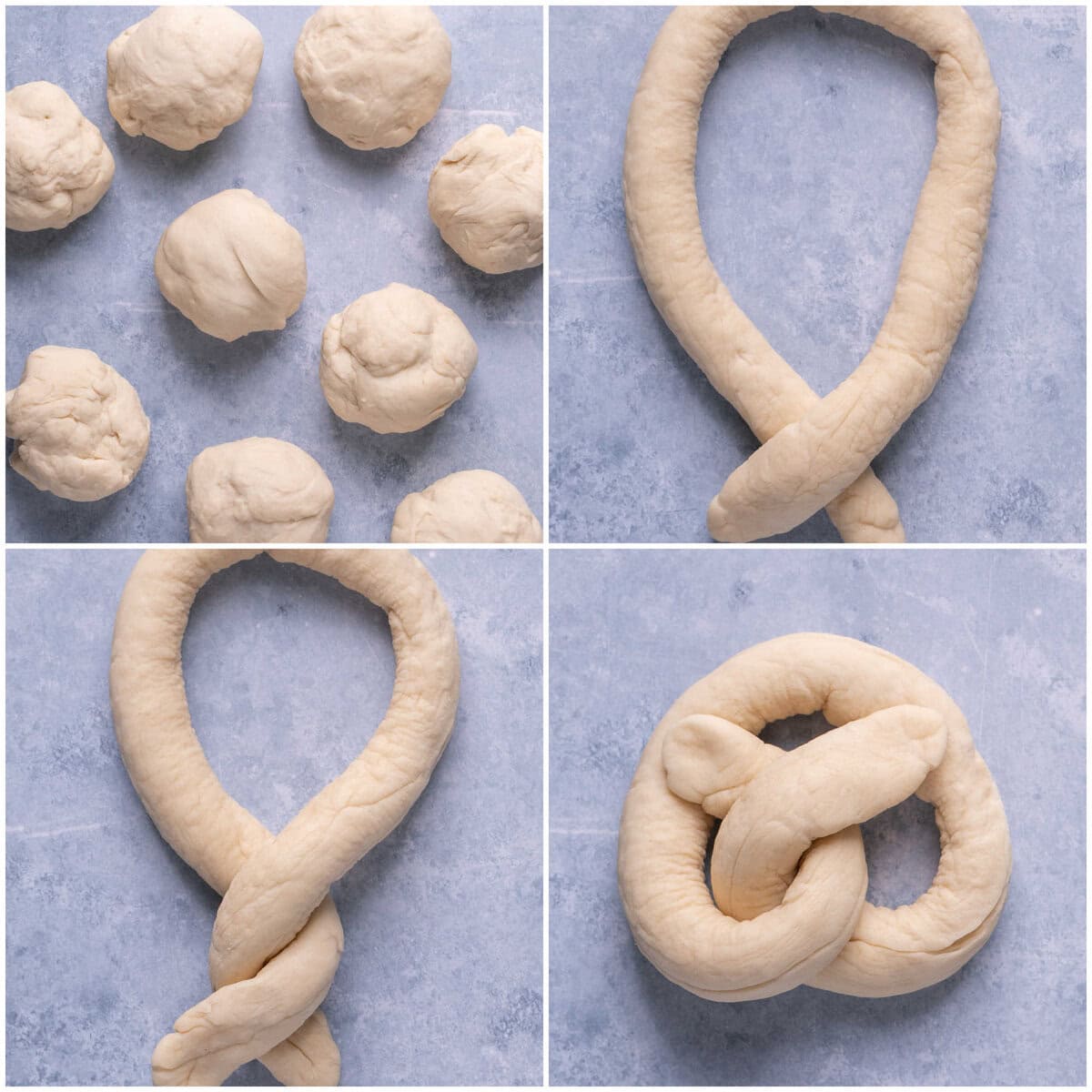
- To shape the pretzels, lift the ends above the middle of the sausage of dough, and twist twice to create a loop. Fold the twist downwards so it rests in the middle of the loop, securing the two ends on the middle of the pretzel.
- Cover the pretzels with oiled food wrap and let rest again for 30 minutes, then add to the fridge to chill for one hour.
- Heat the oven to 450F and line two large baking sheets with baking parchment.
- Make the water bath by boiling 6 cups of water in a large pan, then adding the baking soda. (It will froth when it hits the water.)
- Working in batches of 3, let each pretzel boil for 1 minute at a time, without turning. As you lift the pretzels off of the sheet to add them to the water, stretch them out a little to get a better pretzel-like shape.
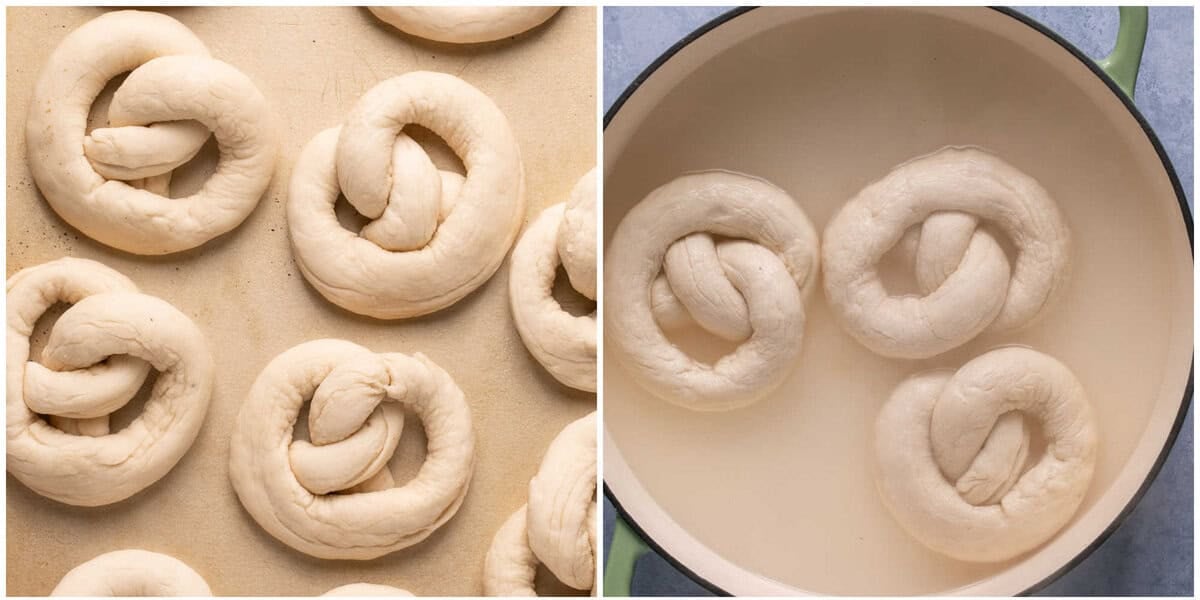
- Remove them from the water with a slotted spoon and transfer them to the prepared baking sheets.
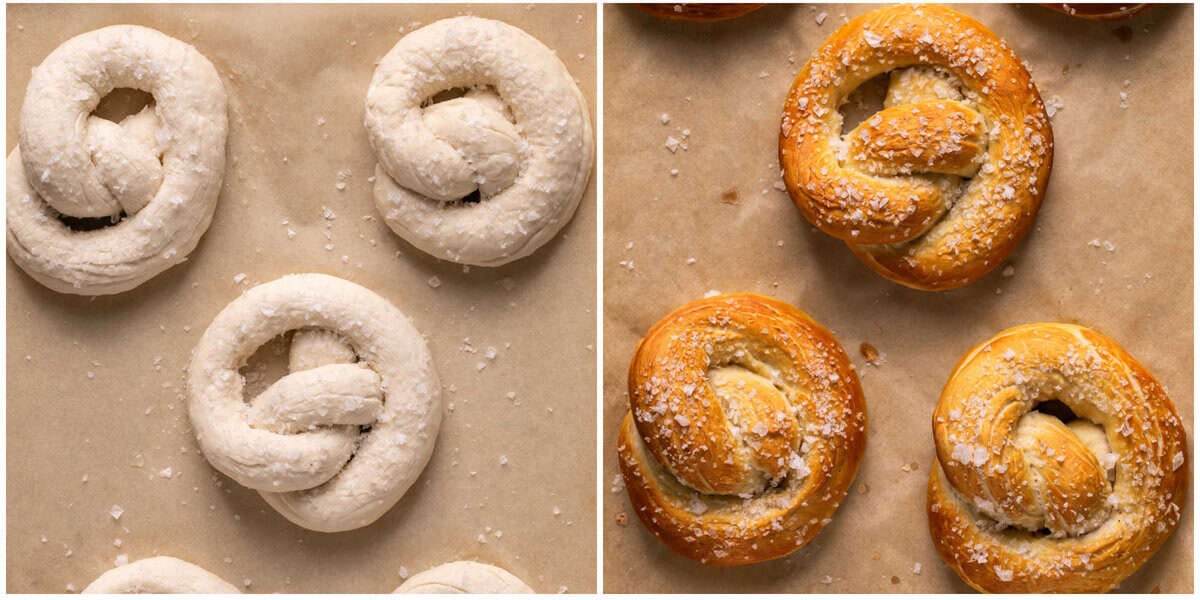
- Sprinkle each pretzel with coarse or pretzel salt before baking for 15 minutes until cooked through and golden.
Expert Tips & Tricks for Perfect Bavarian Pretzels
- These easy soft dough pretzels will keep for up to 2 days when wrapped up tightly, but they’re best eaten the day they’re boiled and baked.
- You can freeze this dough before the first rise, after shaping, or after boiling and baking. The dough/pretzels will keep in the freezer for up to 3 months.
- For a sweet treat, brush the boiled dough with melted butter then sprinkle with a cinnamon/sugar mix before baking.
FAQs
The reason soft dough pretzels need to be boiled before baking is that the baking soda helps the dough to “crust” when you bake it, ensuring a nice brown crust with a chewy, soft inside. It’s the key to texture!
To get a darker color on your crust, allow a little more rest time in between the baking soda bath and the baking step. This allows the outer surface of the dough to dry a bit more and for a “skin” to form on the outside of the dough which allows it to brown more deeply in the oven. You can also place them in the fridge for 30-60 minutes before boiling, and bake at a higher temperature for a darker crust.
They are very similar but there are some key differences. Bavarian or German soft pretzels typically have a slightly denser texture, darker and thicker crust, and are served with hearty sauces like a rustic mustard sauce or served with sausages. American soft pretzels are often made into sweet variations whereas German pretzels tend to stay on the more savory end.
Such a good question. The short answer is that the most traditional and authentic method is to use lye but that baking soda produces essentially the same effect and it much more accessible for home cooks so you’ll most often see recipes online using the baking soda method. I have used it time and time again and love the classic, chewy texture it gives soft pretzels!
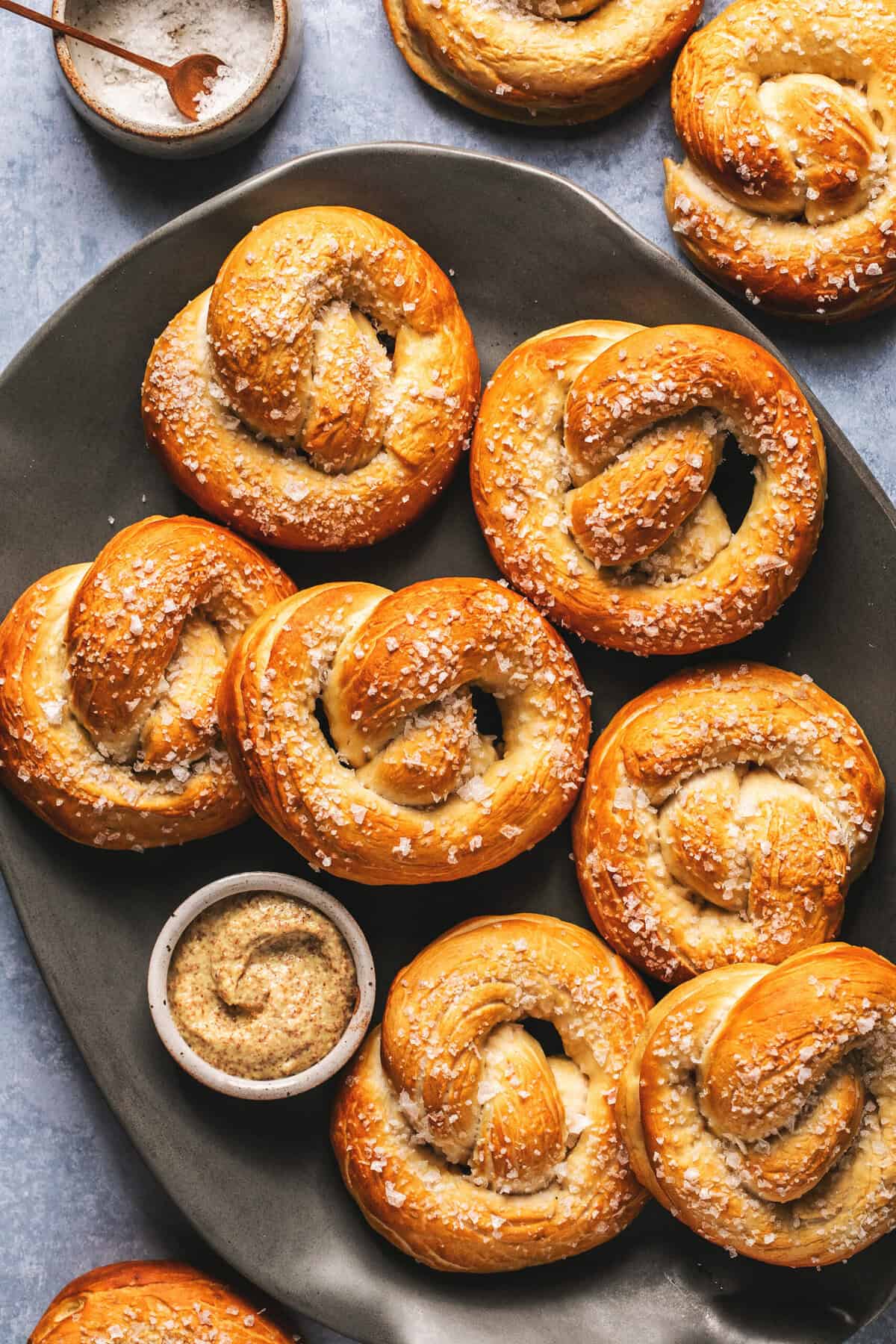
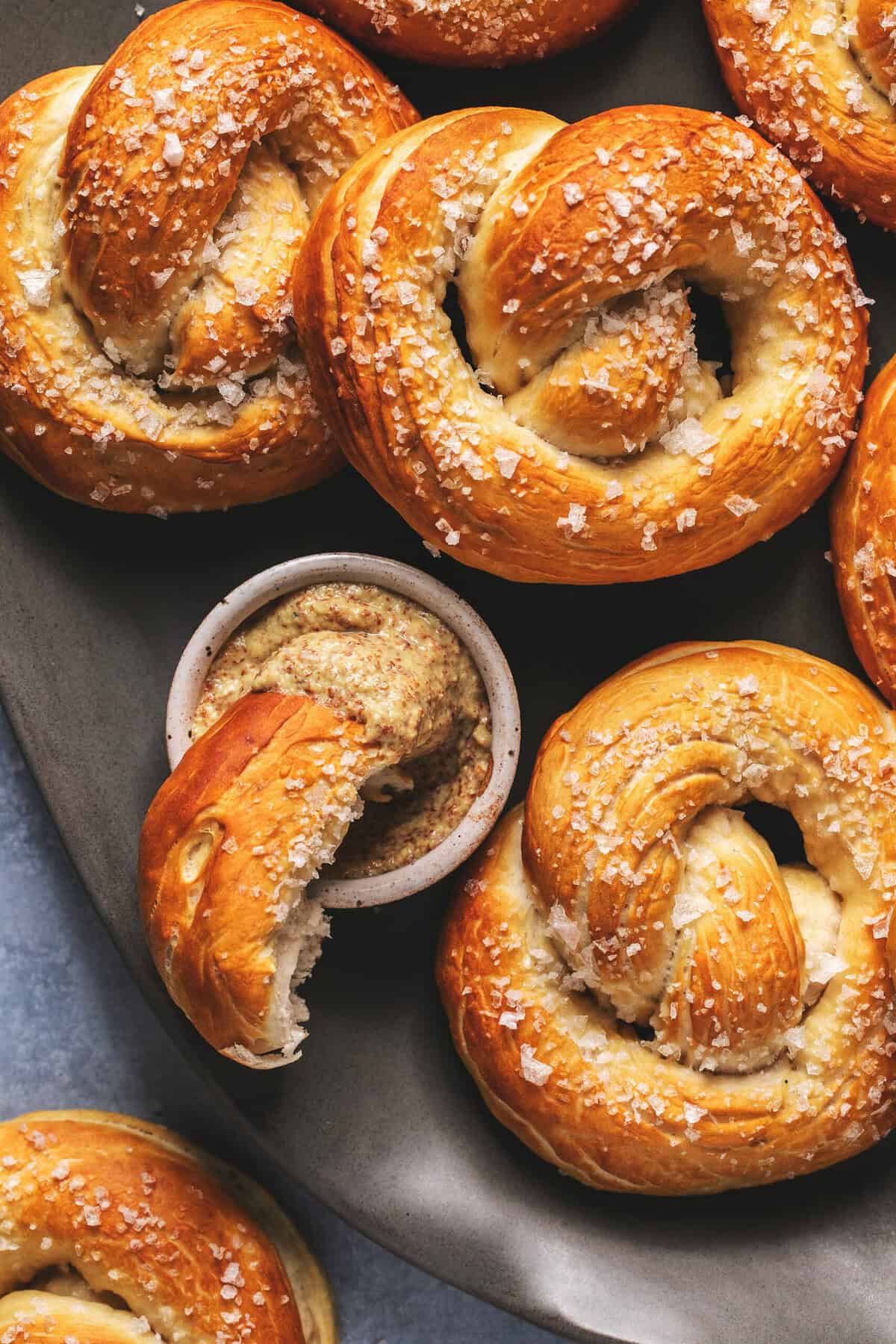
Ah — my favorite part of the soft dough pretzel is the dips! I like to dip mine into a lovely beer cheese (or other cheese dip), honey mustard, marinara sauce, (like the one in my Toasted Ravioli with Cheesy Marinara Sauce), hummus, (for a great recipe, head to my Roasted Red Pepper Hummus), and more! Basically you can dip your pretzel into anything you want! It’s also so delicious with warm butter spread over the top.
More Recipes to Try
- Quick & Easy No Yeast Cinnamon Rolls – soft, pillowy, and delicious!
- Soft Pretzels with Roasted Jalapeño White Cheddar Cheese Sauce – Think melty, bready goodness with just the right amount of heat and zest!
- Old Fashioned Sour Cream Donuts – bakery fresh taste, right at home.
When you make this recipe, snap a photo and tag me on social – I love connecting with you and seeing what you’re up to in the kitchen!

German Soft Pretzels Recipe
Ingredients
For the Pretzels
- 5 cups bread flour
- 1 tbsp brown sugar
- 2 tsp salt
- 1 tsp instant yeast
- 1 ⅓ cups lukewarm water
- 2 tbsp unsalted butter, at room temperature
- pretzel salt or flaky sea salt
For the Water Bath
- 6 cups boiling water
- 2 tbsp baking soda
Instructions
- Using a fork, combine the bread flour, sugar, salt, yeast and water into a shaggy dough in the bottom of your stand mixer bowl.
- Fit the dough hook and set the mixer to a low speed. Gradually add the butter until it is all incorporated into the dough, scraping down the sides with a rubber spatula if needed.
- Turn the speed up to high and knead the dough for 5 minutes. Then, leave it covered to rest for 30 minutes.
- Wet your hand under the cold tap, then use it to lift the dough from the side of the bowl and fold it in on itself. Repeat, turning the bowl slightly each time, until the dough has formed a smooth, tight ball and has too much resistance in it for you to continue. Cover the dough again and rest for a further 30 minutes.
- Turn the dough out onto a clean surface and divide into 10 equal pieces. The dough should not stick to the countertop, but if you’re having problems use oil not flour on the countertop.
- Roll each piece into a long, roughly 20” sausage, letting the ends taper a little but keeping the middle still relatively thick. After you’ve rolled each one, shape the pretzel and transfer to a light oiled tray that will fit in your refrigerator (use multiples if needed.)
- To shape, lift the ends above the middle of the sausage of dough, and twist twice to create a loop. Then, fold the twist downwards so it rests in the middle of the loop, securing the two ends on the middle of the pretzel.
- Cover the shaped pretzels with oiled food wrap and leave to rest at room temperature for 30 minutes before transferring to the refrigerator for 1 hour to chill.
- Heat the oven to 450F and line two large baking sheets with baking parchment.
- Boil 6 cups of water in a large pan, and add the baking soda. It should froth when it hits the water.
- Boil the pretzels for 1 minute at a time, without turning, working in batches of 3. As you lift the pretzels off of the sheet to add them to the water, stretch them out a little to get a better pretzel-like shape. Remove them from the water with a slotted spoon and transfer them to the prepared baking sheets.
- Sprinkle the pretzels with salt before baking for 15 minutes until cooked through and golden.
Notes
Nutrition
Nutrition information is automatically calculated, so should only be used as an approximation.








Soft and delicious!
I’d like to do these with my 4-year old, but I’m wondering if I can brush the pretzels with a baking soda/water mixture instead of boiling them? This is how we made pretzels from a children’s cookbook and I’m just wondering if it would work for this recipe too? (I’m not a pretzel expert, obviously 🤓)
That should still work just fine!
Is it bread flour or all purpose flour?
All purpose flour!